We are a reliable transport agency providing safe and timely logistics solutions.
Our services cover local and long-distance transportation needs.
Our Services
Blog desk · Field report
UNLOCKING NIGERIA’S BLUE ECONOMY: INSIGHTS FROM BRIGHTFLOW LOGISTICS SERVICE ON NATIONAL TELEVISION
Feb 18, 2026
3 min read
201 views
A
Admin
Filed · Feb 18, 2026
Nigeria’s maritime sector once again took centre stage as the CEO of Brightflow Logistics Service, Dr. Anie Iton, was featured in a national interview...
Nigeria’s maritime sector once again took centre stage as the CEO of Brightflow Logistics Service, Dr. Anie Iton, was featured in a national interview discussing the vast opportunities within Nigeria’s blue economy. The conversation highlighted not only the enormous global value of ocean-based industries but also the strategic role Nigeria can play if the right frameworks are implemented.
Globally, the blue economy represents an estimated $1.5 trillion in annual value, a figure projected to grow significantly by 2030. This economic space spans shipping, marine resources, offshore energy, fisheries, port operations, and logistics sectors that remain critically important for developing nations with coastal advantages. However, experts agree that this potential must be unlocked through sustainable development, ensuring that growth does not come at the expense of environmental stability.
NIGERIA’S MARITIME ADVANTAGE
During the interview, Dr. Iton emphasized that Nigeria possesses a unique and largely underutilized maritime advantage. Particular attention was drawn to the South-South region, including Cross River State, where natural coastal assets present strong export and trade opportunities. These domains, if properly developed, could significantly expand Nigeria’s logistics capacity and international trade competitiveness.
She noted that while the region is richly positioned, infrastructure gaps continue to limit its full economic contribution. Ports, shipping channels, and operational facilities require deliberate investment and modernization to accommodate larger commercial activities, including mother vessels.
CLIMATE THREATS TO THE BLUE ECONOMY
A critical dimension of the discussion centred on climate vulnerabilities. Rising sea levels, coastal erosion, and environmental disruptions increasingly threaten maritime ecosystems and infrastructure. Sustainable planning, environmental protection, and resilient infrastructure development were underscored as non-negotiable priorities.
KEY FACTORS AND WHAT MUST BE DONE
Dr. Iton outlined several practical steps necessary to transform Nigeria’s maritime potential into measurable economic gains:
1. GOVERNMENT-LED KNOWLEDGE SHARING & HUMAN CAPACITY DEVELOPMENT
Strengthening technical expertise across maritime operations, logistics, and engineering remains fundamental. Building human capacity will ensure long-term sectoral stability and global competitiveness.
2. INFRASTRUCTURE DEVELOPMENT & PORT MODERNIZATION
Nigeria must prioritize infrastructure capable of accommodating larger vessels, improving port efficiency, and enabling modern shipping operations. Strategic restructuring promises can only yield results when backed by physical development.
3. ROAD NETWORK IMPROVEMENT
Poor transport connectivity continues to constrain cargo movement to commercial hubs such as Onitsha and other business corridors. Efficient logistics require reliable inland transportation systems.
4. DOCKYARD REHABILITATION & TECHNICAL RESOURCES
Dockyards require immediate attention, including modern equipment and availability of qualified marine engineers. Without technical support systems, maritime growth remains stalled.
5. CROSS-SECTOR COLLABORATION
State governments particularly in the South-South alongside the oil and gas sector must work synergistically with maritime stakeholders. Integrated planning will amplify national economic outcomes.
A STRATEGIC NATIONAL OPPORTUNITY
Nigeria’s blue economy is not merely a theoretical concept; it represents a tangible pathway for diversification, job creation, trade expansion, and sustainable growth. The maritime industry including shipping, freight forwarding, and logistics stands at the centre of this opportunity.
Brightflow Logistics Service remains committed to supporting conversations, policies, and operational frameworks that drive Nigeria toward a stronger, more efficient, and globally competitive maritime future.
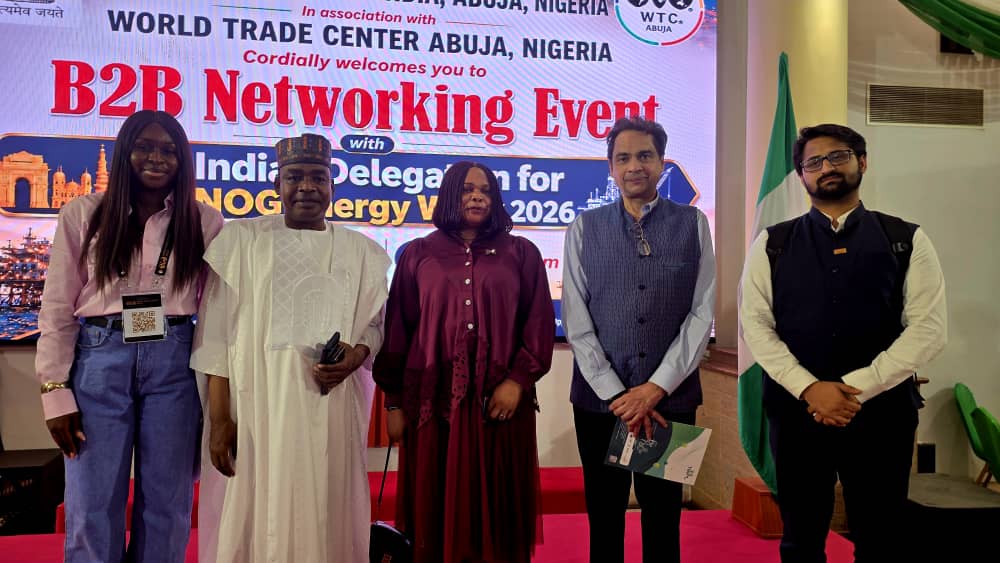
Bright Flow Logistics Services is proud to announce its selection as an official partner of the World Trade Centre (WTC) Abuja for the upcoming Export...
As part of its commitment to fostering strategic international partnerships and advancing Nigeria's position in global trade and investment, the Manag...


 BFL-BLG